
(702) 355-1422
Mon: 1–5 PM | Tue–Wed: 9 AM–5 PM | Thu: 9 AM–1 PM
Plantar fasciitis often improves with conservative care. Stretching, activity modification, supportive footwear, physical therapy, and other basic treatments can be very effective, especially when the problem is addressed early.
But that is not every patient’s experience.
Some people stretch faithfully, change shoes, try orthotics, go through physical therapy, and still have pain months later. Others improve temporarily, only to have the pain return as soon as they increase their walking, exercise, golf, or daily activity.
When that happens, simply repeating the same treatment may not answer the most important question:
At Las Vegas Regenerative Pain Center, that is where the evaluation starts.
One of the first things I evaluate is where the patient is actually tender.
Plantar fasciitis commonly causes pain around the plantar heel, but patients do not always describe their symptoms in textbook terms. Some tell me that the worst pain is through the middle of the bottom of the foot. Others have symptoms extending into the heel, Achilles region, calf, ball of the foot, or top of the foot.
That distribution matters.
I want to know:
The location of tenderness is an important part of diagnosing plantar fasciitis and determining whether another source of foot pain needs to be considered. Imaging is not necessary for every straightforward case, but persistent or atypical symptoms may sometimes warrant additional investigation to rule out other problems.
The point is simple:
“Heel pain” and “plantar fasciitis” are not automatically interchangeable.
If months of treatment have failed, confirming what tissue is actually involved becomes more important, not less.
Stretching is not useless. In fact, current clinical guidelines continue to support plantar fascia-specific and calf stretching as part of treatment for plantar fasciitis.
The problem I often see is different.
A patient may have been shown one or two stretches and assume that the entire mechanical problem has therefore been addressed.
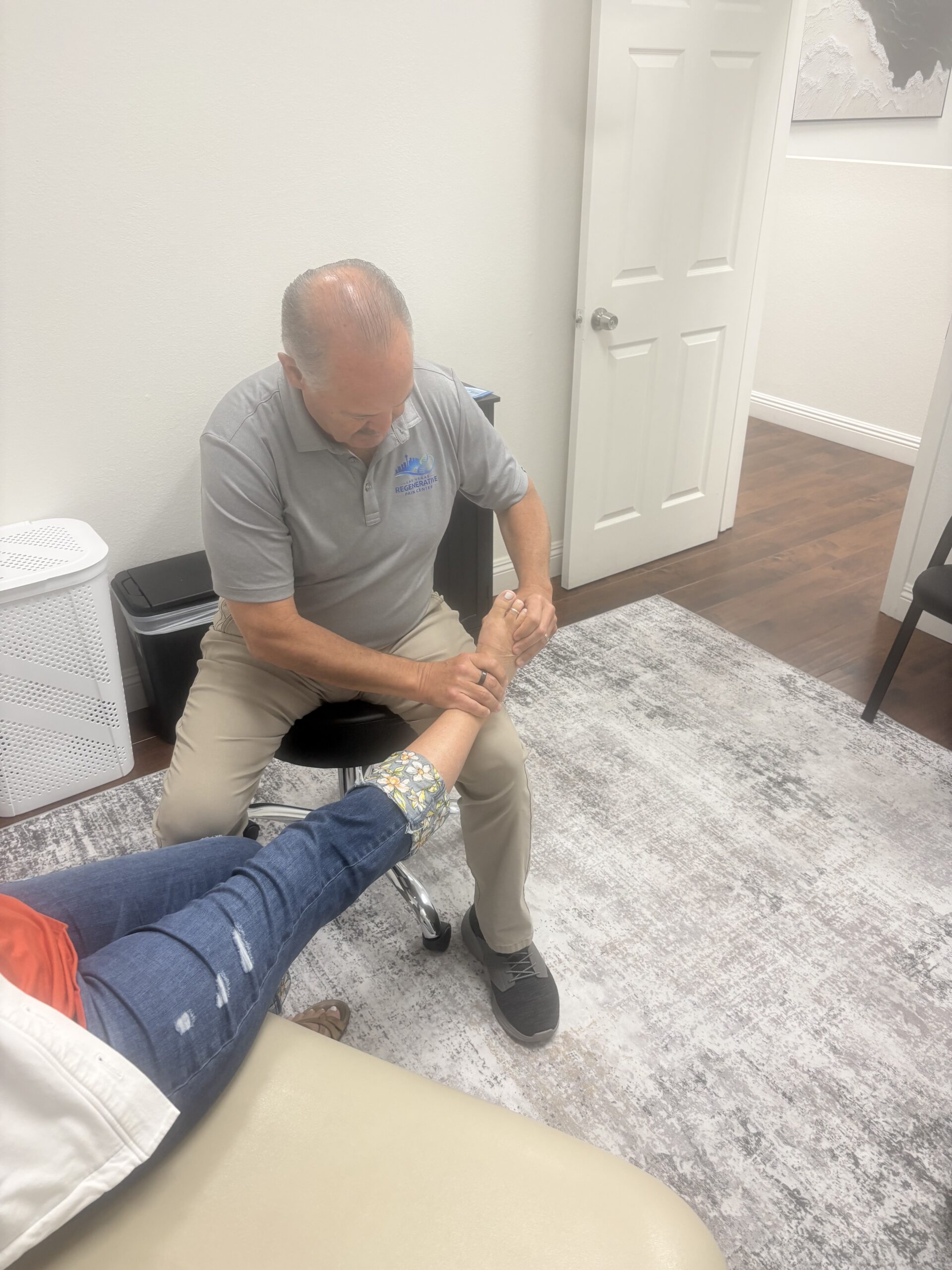
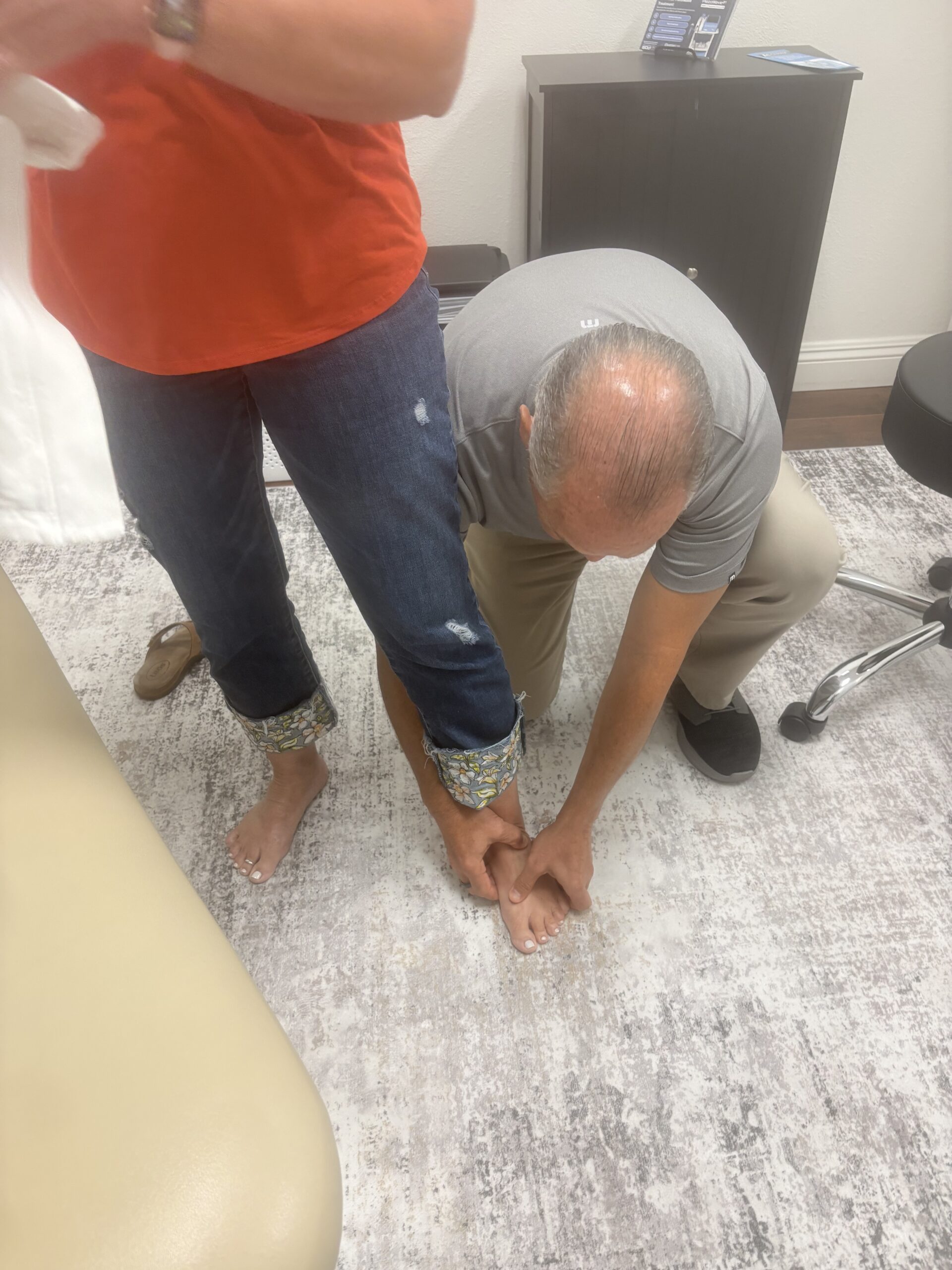
During an evaluation, I look beyond the painful location. If there is restriction or tightness through several parts of the foot and lower leg, repeatedly stretching one area may not change the way the entire region is loading.
For example, I may find that more than one area needs attention rather than simply focusing on the bottom of the heel.
That is why I also examine:
The goal is not to search endlessly for a mysterious “root cause.”
It is to determine whether there are identifiable mechanical or tissue factors that may be contributing to repeated irritation.
Another important distinction is how long the problem has been present.
A relatively new plantar fascia problem and a condition that has been irritated for many months are not necessarily behaving the same way.
Persistent plantar fasciitis can develop degenerative features within the fascia rather than representing simple short-term inflammation alone. This is one reason chronic plantar fascia pain is increasingly described in the medical literature as a fasciopathy rather than purely an inflammatory condition.
Clinically, this matters because I sometimes see patients who have already done a reasonable amount of stretching and basic conservative treatment but still have a very specific, persistent area of tissue tenderness.
At that stage, my question becomes:
Is this still primarily a flexibility problem, or is there a chronic tissue problem that needs to be evaluated differently?
That does not mean every chronic case requires an advanced treatment.
It means chronicity changes the decision-making process.
Orthotics and supportive footwear can be useful because they can alter how forces are distributed through the foot. They are commonly included as part of conservative plantar-fasciitis management.
But an orthotic is not a guarantee that persistent plantar fascia pain will disappear.
A patient can have appropriate footwear or an orthotic and still have:
That is why I do not use the question, “Have you tried orthotics?” as the end of the evaluation.
I want to know what changed when the patient used them, what did not change, and what the foot is doing now.
Patients often arrive saying:
“I already tried PT and it didn’t work.”
That statement needs context.
Physical therapy can be very appropriate for plantar fasciitis, and evidence supports stretching, strengthening, manual therapy, and other interventions depending on the individual presentation.
The more useful questions are:
Sometimes the previous care was reasonable, but the condition simply remained persistent.
Sometimes important areas of restriction or loading were never addressed.
And sometimes the patient’s current presentation is no longer the same as it was when treatment began.
The answer should not automatically be “more PT” or “PT doesn’t work.”
The answer should be another thoughtful evaluation.
This is one of the most common assumptions I hear in chronic cases.
Stretching can be important.
But stretching is a tool, not a diagnosis.
If a patient has been appropriately stretching for months and a very specific painful area remains, I want to understand why that tissue continues to become irritated.
That may require looking at:
This is especially important for active adults who are not simply trying to make the foot comfortable while sitting.
They want to walk, exercise, travel, play golf, garden, or remain active without repeatedly triggering the same problem.
The real objective is therefore not just reducing tenderness for a day.
It is improving the patient’s ability to tolerate the activities that matter to them.
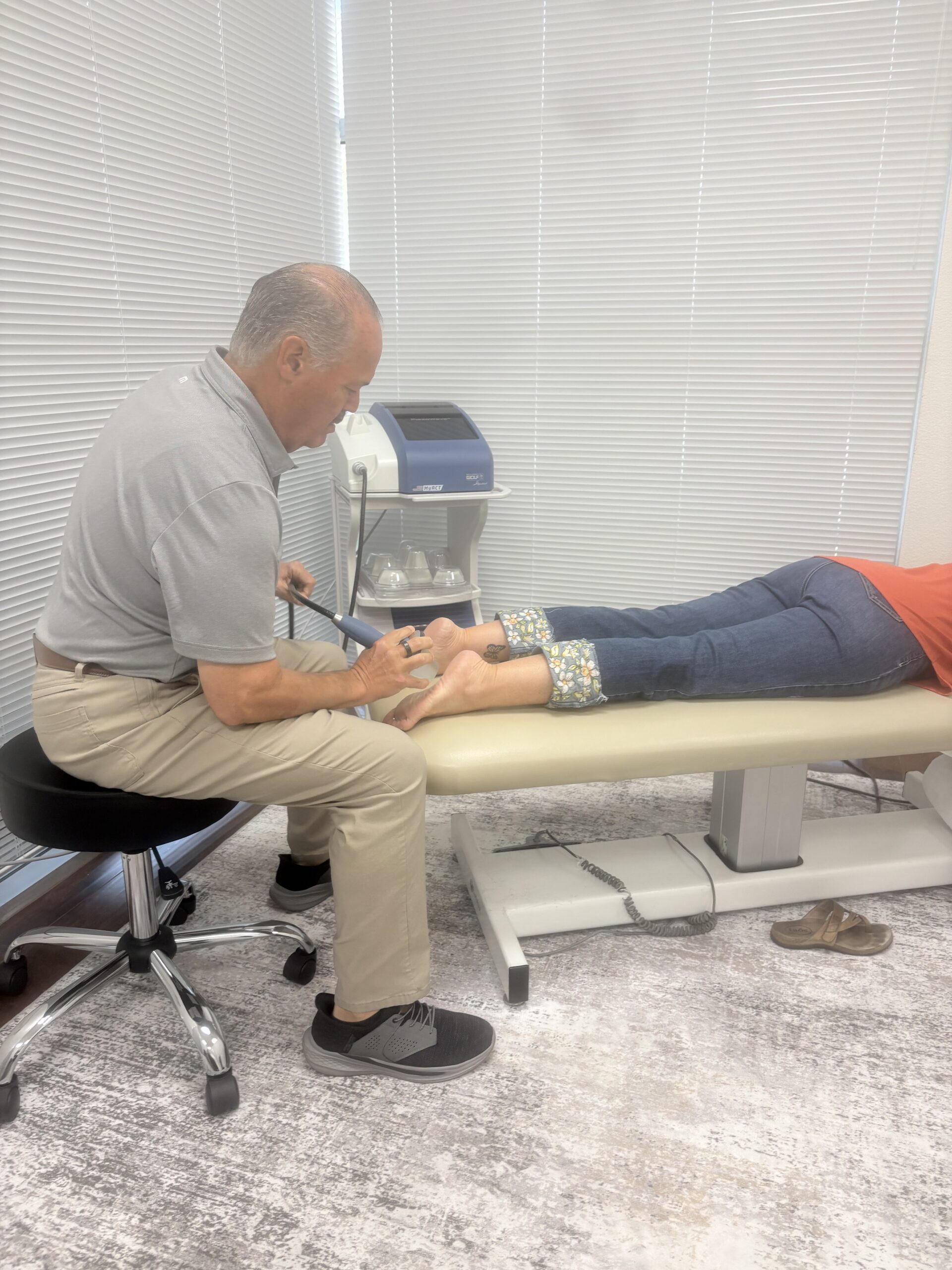
Focused shockwave therapy is one option for selected patients with persistent plantar fascia pain.
It should not be the automatic recommendation simply because someone says they have plantar fasciitis.
Research on extracorporeal shockwave therapy shows that it can be useful for plantar fasciopathy, although study results vary depending on the protocol and comparison treatment. Some recent systematic reviews show improvement in certain pain or functional outcomes, while others have not found shockwave clearly superior to all other nonsurgical approaches.
That is why patient selection matters.
In my evaluation, findings that make me more interested in focused shockwave include:
What I Mean by Tissue Mapping
Tissue mapping is part of how I assess the symptomatic area before deciding whether focused shockwave is appropriate.
Rather than treating the entire foot simply because the diagnosis says “plantar fasciitis,” I evaluate the tissue to identify whether there is a reproducible area that corresponds with the patient’s complaint.
A positive tissue-mapping finding, combined with the rest of the examination, may support the decision to use focused shockwave.
A negative tissue-mapping finding makes me question whether shockwave is the appropriate tool for that patient.
That distinction is important.
The goal is not to sell shockwave to everyone with heel pain. The goal is to determine whether the patient’s presentation actually fits the treatment.
When Shockwave May Not Be the Right Next Step
Not everyone with chronic foot pain is a good shockwave candidate.
I become more cautious when:
In those situations, applying shockwave simply because the foot hurts would be poor clinical reasoning.
Sometimes the most useful outcome of an evaluation is deciding not to perform a treatment.
Most plantar-fasciitis cases do not require complicated treatment.
But if you have already spent months stretching, modifying activity, changing shoes, using orthotics, or attending therapy and the same pain keeps returning, the next step should probably not be blindly repeating everything indefinitely.
It may be time to ask different questions:
Those are the questions I want answered before recommending another treatment plan.
At Las Vegas Regenerative Pain Center, persistent plantar fasciitis is evaluated as more than simply a painful heel.
The examination looks at the location of symptoms, surrounding areas of tenderness or tightness, foot mobility, standing and walking mechanics, treatment history, and whether the tissue findings are consistent with an appropriate focused shockwave candidate.
Not every patient is accepted for treatment, and focused shockwave therapy is not appropriate for every case.
If heel or plantar fascia pain has persisted despite conservative care, an evaluation can help determine whether there is a reasonable next step.
Schedule an evaluation to determine whether your persistent heel pain is appropriate for this type of care.
1. American Physical Therapy Association / JOSPT heel pain–plantar fasciitis clinical practice guideline, summarized by American Family Physician.
2. Mayo Clinic — Plantar Fasciitis: Diagnosis and Treatment.
3. Lippi L, et al. Efficacy and tolerability of extracorporeal shock wave therapy in patients with plantar fasciopathy: systematic review with meta-analysis and meta-regression. European Journal of Physical and Rehabilitation Medicine. 2024.
4. Simental-Mendía M, et al. Effect of extracorporeal shockwave therapy on plantar fascia thickness in plantar fasciitis: systematic review and meta-analysis. Archives of Orthopaedic and Trauma Surgery. 2024.
If plantar fasciitis or chronic heel pain has continued despite stretching, orthotics, physical therapy, or other conservative care, an evaluation can help determine what may be contributing to the problem and whether focused shockwave therapy or another approach may be appropriate.